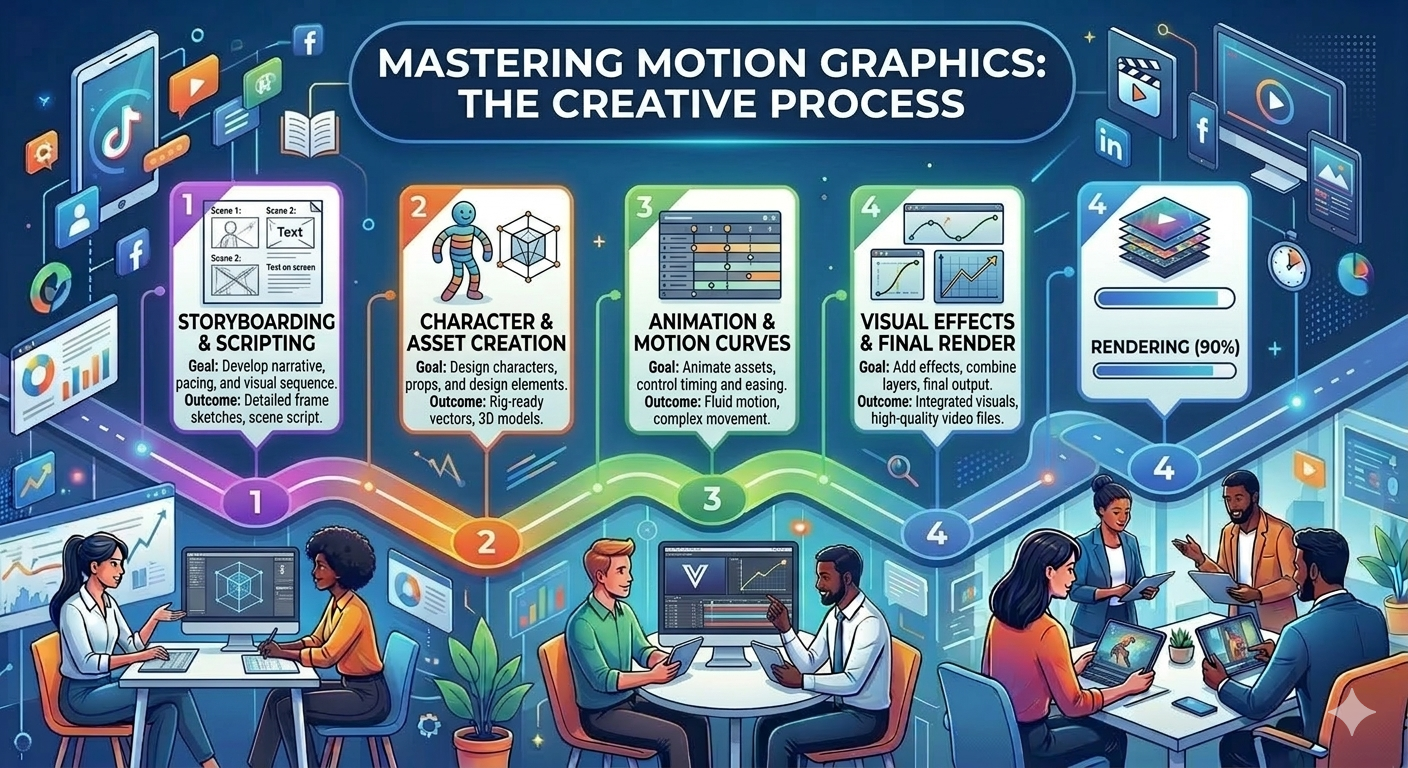
Motion graphic design is a form of digital design that combines graphic design elements with animation to create moving visuals. It involves bringing static graphics such as text, shapes, icons, and illustrations to life using motion, timing, and visual effects. Motion graphics are widely used in videos, films, advertisements, television programs, websites, and social media content to communicate information in an engaging and dynamic way.
Unlike traditional animation, which focuses on storytelling with characters, motion graphic design mainly emphasizes visual communication and graphic elements. Designers use movement to guide viewers’ attention, explain ideas, and make information easier to understand. For example, motion graphics are often used in explainer videos, logo animations, title sequences, and infographics
Motion graphic designers typically use professional software such as Adobe After Effects, Adobe Premiere Pro, and Cinema 4D to create animations and visual effects. These tools allow designers to animate text, create transitions, add sound effects, and integrate 3D elements into their projects
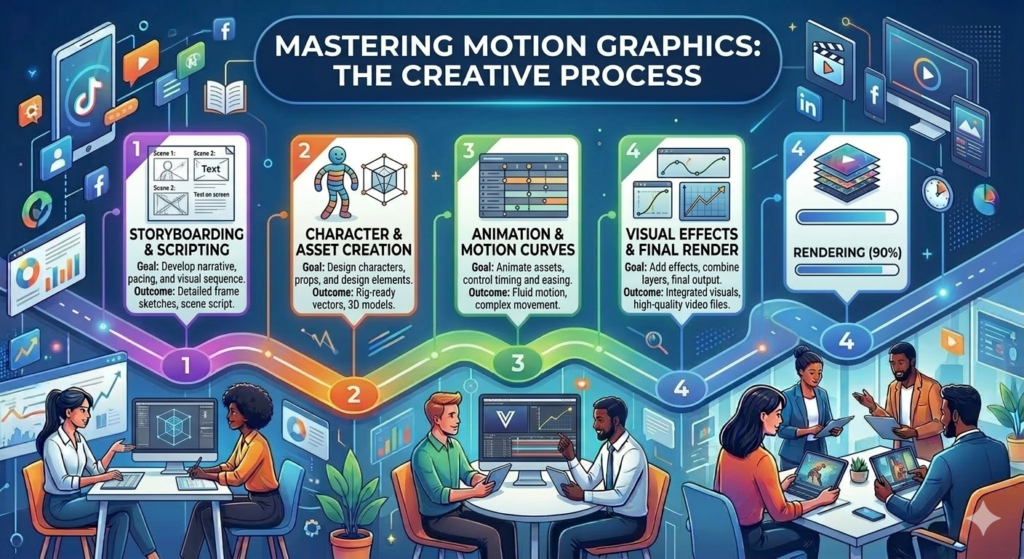
The main elements of motion graphic design include typography, color, shapes, timing, transitions, and sound. When these elements are carefully combined, they help deliver messages clearly and attractively. Motion graphics also play an important role in branding, as companies often use animated logos and promotional videos to capture audience attention.
With the growth of digital media and online platforms, motion graphic design has become an essential skill in the creative industry. It helps businesses, educators, and content creators present complex ideas in a visually appealing and easy-to-understand format.
No responses yet