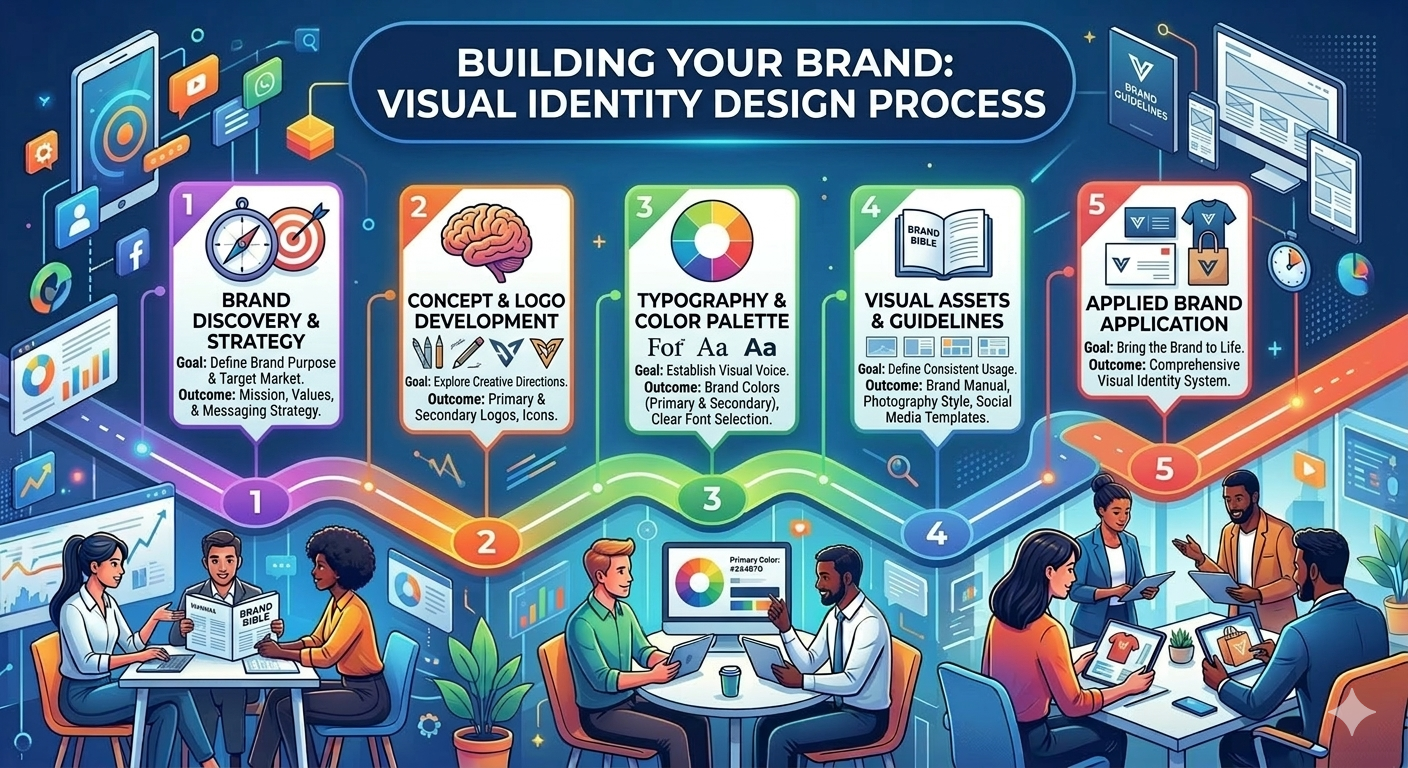
Visual identity is an important part of graphic design that helps a brand create a unique and recognizable image. It refers to the visual elements that represent a company’s personality, values, and message. A strong visual identity allows a brand to stand out in a competitive market and makes it easier for customers to remember and trust the brand.
The main components of visual identity include the logo, color palette, typography, images, and design style. A logo is often the most recognizable element of a brand. For example, the simple apple logo used by Apple is instantly recognizable worldwide. Colors also play a key role because they create emotional connections with audiences. For instance, the red color used by Coca-Cola is associated with energy, excitement, and happiness
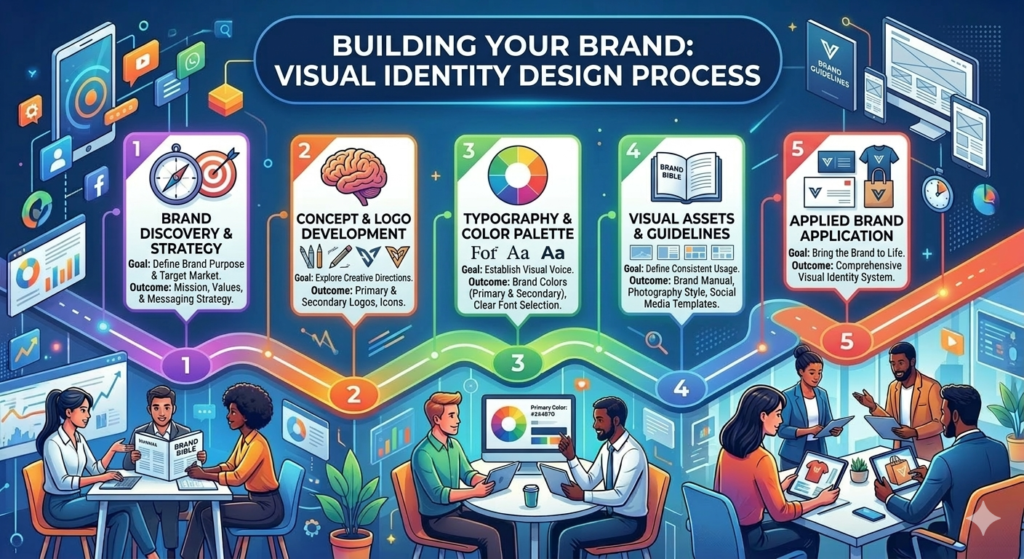
Typography, or the style of text used in branding, also contributes to visual identity. Choosing the right fonts helps communicate the brand’s personality. Images, icons, and graphics further strengthen the visual style and make the brand more appealing and engaging
A consistent visual identity is essential across all marketing platforms, including websites, social media, packaging, and advertisements. Platforms such as Instagram and Facebook allow businesses to maintain a consistent look that helps audiences quickly recognize their brand
In conclusion, visual identity in graphic design is more than just creating attractive visuals. It is about building a cohesive and memorable brand image that communicates a company’s values and connects with its audience. When designed effectively, visual identity strengthens brand recognition, improves customer trust, and supports long-term business success.
No responses yet